Eighteen Elements
of Water in Judaism
2026
9.5” x 14”
Water covers 71 percent of the planet and sustains all animal and plant life. The human body is composed of 60 percent water. In the arid region where the Israelites first established themselves, and throughout the world, water remains a scarce and precious resource. Consequently, all cultures hold water as a spiritual and purifying force.
The following verses are those
I consider to be the most inspirational elements of water in Judaism from the original Hebrew text. The images are primary with English explanations for non-Hebrew readers to offer some context for the visual illustrations.
God’s spirit gliding over the waters first appears in the second verse of Bereshit (Genesis), thus organically linking water with the spiritual realm of the divine in Torah.
The eighteen passages
gathered here create a narrative arc of water moving from the cosmic to the most intimate. In Judaic numerology, eighteen stands for chai or life. Water is life, and my intent is to highlight the importance and unique role of water as a spiritual element in Judaism. Perhaps these images will inspire viewers to regard water with more reverence and hold it sacred even in our modern world.


God created a watery expanse above the realms and great waters below the realms. The wonder of these endless expanses of watery masses has a cosmic and immeasurable quality. Between them, God formed the space where our world exists.
The endless quality of water is illustrated in this passage. Water is always moving, with no beginning and no end. The rivers flow into the sea, yet it is never full. In this unending abundance, water begins life and sustains life.
Many cultures have a catastrophic flood origin story. In Torah, Noah’s ark saves human and animal life, swaying for forty days and nights amidst the deluge.


God promises a season of rains for the land to produce bountiful crops in both the field and orchards. A tender passage which evokes God’s generous care for the people, as long as they remain faithful to God’s tenets.
The daily insertion of this morning prayer asks for the miracle of rain to bring life to plants. The prayer for a good measure of rain during the rainy season and for dew in the growing season in the land of Israel is recited worldwide.
God’s powerful rains thundering from the sky can dissolve flint into water. One of the hardest stones can be reduced to a mere fountain by water.


The waters saved the infant Moses by concealing him in
an ark amongst the reeds. Miraculously, the baby is
found by Pharaoh’s daughter and raised in their Royal court to become a powerful sage and leader.
Here is God’s miracle of splitting the sea, permitting Moses to lead the Israelites safely across to freedom.
The passage alludes to water’s duality both as beneficial and destructive. The powerful weight of the waters split for the Israelites but then came crashing down, drowning the Egyptians.
God gives the lifesaving gift of water, even in the heart of the desert, from a boulder that offers no sign of the bounty concealed inside. The Israelite’s belief in God’s magnificent power keeps them alive in the desert and throughout the millennia.
Miriam is associated with water as a joyful, lifegiving resource. She witnesses Moses being drawn from the waters of the Nile, she leads the jubilant singing after the crossing of the sea and she accompanies the Israelites with music throughout their desert journey. Thus, the rabbis link Miriam to an ever-present well which follows the Israelites in the wilderness.


Prior to eating meals, a cup is filled with water and ritually poured on each hand, followed by a blessing. This act reminds us how in contemporary Judaism, the Jewish people are the inheritors of the priesthood and the Great Temple. Through this visceral action an ordinary meal is transformed into a sacred act.
The Mikvah ritual is a full bodily immersion in a pool with naturally sourced waters, followed by recitation of a blessing. Performed by both men and women, it marks a passage toward purity often after menstruation, childbirth, illness or other intimate transitions. In surrendering to the waters, the ritual becomes a cleansing and a rebirth.
On the first day of Rosh Hashana the Tashlikh ritual is performed as symbolically casting off our past sins. Jews recite the passage above then throw stale bread into a natural body of water, preferably one with fish. The choreography of physically casting away our transgressions into moving waters is both cathartic
and spiritual.
This ancient biblical ritual, performed only in the days of the Great Temple, occurred when a husband suspected his wife of infidelity but lacked witnesses. The woman drank water mixed with dust and dissolved curses to test her innocence. If guilty, her thighs would sag and stomach swell, turning the water into an instrument
of judgement.



Jonah flees God both outwardly and inwardly in this passage. Trying to escape God’s command to prophesy against evil, he boards a ship, stirs a violent storm and is tossed into the depth. Jonah’s internal struggle is perfectly captured by his plunge into the weed entangled depths.
This excerpted poem is the heart of the High Holidays, recited on both Rosh Hashana and Yom Kippur. God sits in judgement and decides who will live and who will die, including who by water. Meaningful, moving, and awe-inspiring, accompanied by glorious music, it is one of the most powerful religious moments of the services.
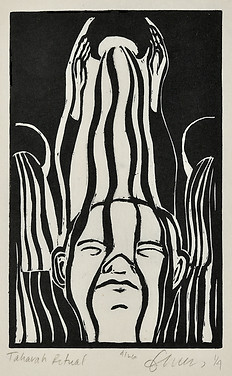
The Tahara ritual is a sacred preparation of the deceased for burial, rooted in this verse from Ezekiel. It is performed by the Chevra Kadisha,
the Burial Society, through prayer, song and prescribed customs. This holy ritual marks the body’s final passage from this world with reverence and care.
The joy of having water is sung at nearly every Jewish celebration. Weddings, b’nei mitvzah, festive gatherings, and religious holidays are lifted by song and dance to this ancient verse.